Why Do Productivity Tips Fail Remote Workers?
Most productivity tips for remote workers don’t work. There, I said it. The advice floating around in most articles completely misses the two things that actually matter: environment design and accountability.
Generic advice like “wake up early” or “make a to-do list” ignores how your brain actually functions at home. Without a system built for your specific environment, you’ll keep spinning your wheels.
Here’s what the research shows. According to Pew Research (2025), 77% of remote workers report higher productivity. Yet most still struggle with boundaries and distractions. Why the disconnect?
The problem isn’t motivation. It’s design. Your home wasn’t built for deep work. The kitchen calls. Netflix waits. Your bed is ten steps away. No article about “staying focused” can fix that structural problem. And that’s why 90% of productivity tips for remote workers fail before they even start.
I learned this the hard way. But before I share what works, let me tell you about the mistake that cost me everything.
The $1,200 Mistake That Changed Everything
I wasted $1,200 and three months of effort because I had no system. Working harder doesn’t work. Working smarter does — and that requires the right productivity tips for remote workers.
In those early days, I worked late into the night. Every night. Sleep suffered. Focus tanked. And the cycle of fatigue and procrastination only made things worse.
I thought more hours meant more output. Wrong. I lost $1,200 in freelance work because I couldn’t deliver quality when running on fumes. Three months of effort, gone.
Here’s what finally clicked: setting boundaries around work hours was vital. Not optional. Vital. By defining when my workday began and ended, I found a rhythm that actually worked.
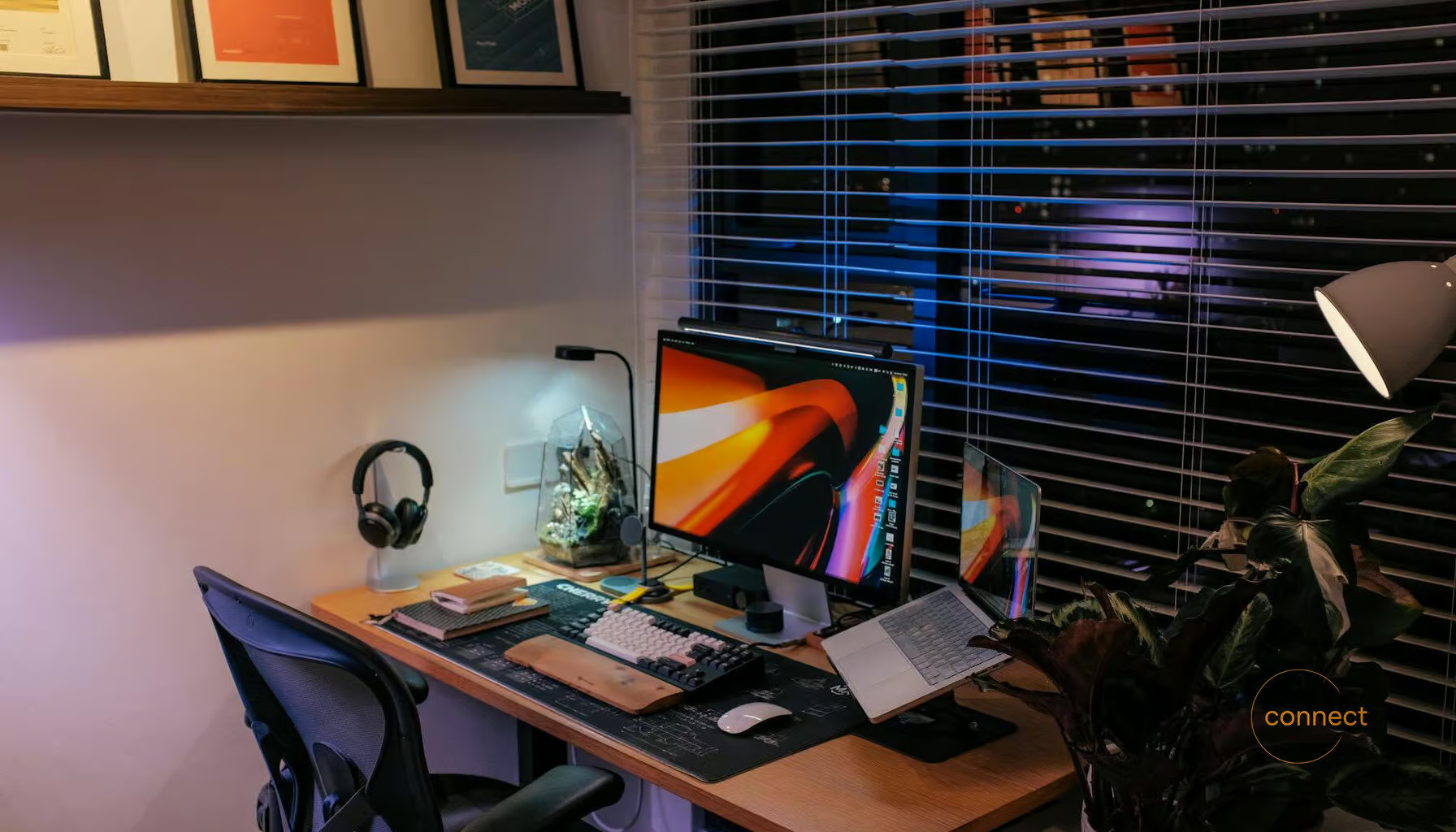
Many remote workers underestimate how environment affects mindset. Even if you don’t have an entire room to dedicate, carving out a corner can do wonders for concentration. According to Stanford’s Work From Home Research, environment design is one of the strongest predictors of remote work success.
In just two weeks after creating a dedicated workspace, I noticed a 30% increase in my productivity. The data backs this up — and it’s one of the productivity tips for remote workers that most people overlook.
Impact measurement
Small details matter too. Plants, better lighting, a quote on the wall. They shift your mindset before you open a single tab.
Productivity Tips That Actually Work for Remote Workers
Four strategies consistently work: clear boundaries, time blocking, distraction blocking, and scheduled breaks. These are the productivity tips for remote workers that I’ve tested and refined over the past year.
Here’s what actually works.
Set Clear Boundaries
Decide when your workday starts and ends. Period. This separates work from personal time and ensures you don’t burn out. It’s one of the simplest productivity tips for remote workers, yet most people skip it.
I found using digital tools like Todoist helped me stay organized. When you see your tasks laid out clearly, sticking to those boundaries becomes easier. Much easier.
Use Time Blocks
I block off specific hours for different tasks. Content creation from 9-11am. Emails from 2-3pm. I use Google Calendar to keep myself accountable. This method helped me go from feeling overwhelmed to completing 90% of my daily tasks within set hours.
The beauty of time blocking? It forces you to be intentional about how you spend each hour. Time blocking is among the most powerful productivity tips for remote workers I’ve discovered.
Limit Distractions
I use apps like Freedom to block distracting websites during work hours. At first, it felt extreme. Almost aggressive. But it truly changed how much I accomplished each day.
Take Regular Breaks
Taking short breaks has been essential. I use the Pomodoro Technique: 25 minutes of focused work followed by a 5-minute break. These breaks are essential productivity tips for remote workers.
Building Accountability Systems
Accountability transforms intentions into results. After adding weekly check-ins with a peer, my goal completion jumped from sporadic to 95% within three months.
Using Trello made it impossible to forget what was due and when.
I found that sharing my goals with a peer led to better accountability. We check in weekly on our progress.
According to Gallup’s 2025 workplace research, employees with strong manager support show 23% higher productivity. Accountability is one of the most underrated productivity tips for remote workers.
Key Takeaways
- 90% of productivity tips for remote workers fail because they ignore environment design and accountability
- Create a dedicated workspace — even a corner works — to separate work from home life
- Use time blocking to complete 90%+ of daily tasks within set hours
- Block distracting websites during work hours using apps like Freedom
- Take regular breaks (Pomodoro: 25 min work / 5 min rest) to maintain focus
- Find an accountability partner for weekly check-ins — this alone boosted my goal completion to 95%
Frequently Asked Questions
How can I stay motivated while working remotely?
Staying motivated can be tough when you’re alone at home all day. Try setting clear goals each week and celebrating small wins along the way. This keeps your momentum going. Also, consider joining online communities related to your field.
What are some tools that help improve remote work productivity?
There are plenty of tools out there. Trello or Asana can help you organize tasks visually. Slack or Microsoft Teams keeps communication flowing smoothly with coworkers. Don’t forget about Notion or Evernote for note-taking.
How often should I take breaks during the workday?
I recommend taking breaks every 60-90 minutes if possible. This helps refresh your mind and body. You could try the Pomodoro technique (25 minutes on, 5 minutes off) to see what feels best for you.
Why do most productivity tips for remote workers fail?
Most productivity tips for remote workers fail because they’re generic. They don’t account for your specific environment, habits, or accountability needs. The tips that work are the ones you can adapt to your situation.